Skip to content
Sign in
SWC 2026 Top 10

Yo-Kai Express Inc.

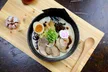
Robotic 'autonomous restaurants' serving hot ramen in about 90 seconds, with 250+ machines in US, Japanese and Taiwanese transit hubs.

Mountain View, California, United States, North AmericaAgri & FoodTech, Autonomous restaurant / hot ramen vending machinesTaiwan Startup World Cup 2026 – Kaohsiung (winner; 23-24 July 2026, top 15)
Stage
Series AAI integrated
Product
ScalingStrong traction
Funding raised
$19Mdisclosed
Founded
201610 years ago
Founders
1Andy
Global score
6.5Grade BRank 4 of 151

Overview

Yo-Kai Express operates "autonomous restaurants": vending machines that prepare and serve restaurant-quality hot ramen bowls in about 90 seconds, deployed in the United States and Japan (train stations, highway rest areas).

Traction

Strong traction

More than 250 ramen vending machines deployed (SFO, Tesla factories, Ueno station), according to Taiwan News 2025. In Taiwan: machines at Taoyuan airport and Ximen MRT station (Taipei); partnership with 7-Eleven (Uni-President) in 2026; presence in the USA, Japan, Korea, Singapore, Europe.

Market

Smart vending machines / automated retail

Hosts with high foot traffic but no space or staff for a kitchen (airports, stations, factories, highway rest areas) want 24/7 hot food. Labour shortages and rising wages make automated food service economically attractive, while restaurant brands gain new points of sale without opening stores. Yo-Kai's model combines machine placement, frozen restaurant-quality bowls and fleet software. Profitability hinges on utilisation per machine and food logistics.

Addressable market

2025
$13.4B
2030
$22.2B
+10.6% a year

Smart vending machines / automated retail: $13.4bn in 2025, +10.6%/year (Stratistics MRC); Persistence values it at $26.7bn.

Customers

Travellers and workers at airports (SFO), stations (Ueno), factories (Tesla), highway rest areas; convenience retailers (7-Eleven Taiwan).

Who signs the cheque

Site hosts and landlords, convenience chains, and restaurant brands supplying bowls; consumers pay per bowl.

Geographies

  • United States
  • Japan
  • Taiwan
  • South Korea
  • Singapore
  • Europe

Drivers

  • Labour shortages in food service
  • Recovery of transit and airport traffic
  • Restaurant brands seeking capital-light distribution

Headwinds

  • Capital intensity of hardware
  • Per-machine profitability not published
  • Frozen food logistics and food-safety compliance in each country

The smart vending and automated retail market is estimated at $13.4bn in 2025 (+10.6%/year) by Stratistics MRC; Persistence values it at $26.7bn.

Scalability 5/10. Hardware deployed machine by machine with local food logistics, but the model has already been replicated in several countries.

Market source: marketpublishers.com

Technology

Category

Food robotics hardware + fleet software

AI integratedRobotics / physical AIMachine learning / predictive

Maturity

  1. R&D
  2. Prototype
  3. Pilot
  4. On the market
  5. Scaling

scaling

How it works

Machines store frozen bowls, reheat and assemble them automatically in about 90 seconds, with contactless payment and connected fleet management. The company describes an AI platform for dynamic pricing and inventory across machines.

Moat

Moderate: installed base of 250+ machines, strategic partners (Japan Tobacco, Ippudo's parent, Pulmuone, 7-Eleven) and a SoftBank Robotics IP licence create execution and supply moats; hardware itself can be imitated.

Differentiation

Restaurant-quality hot meals versus snack vending; far lower footprint and labour than a staffed outlet.

Integration points

  • Payment providers
  • Fleet telemetry and inventory software
  • Host-site loyalty and voucher systems
  • Food manufacturers and restaurant brands

Depends on

  • Frozen supply chain and food partners
  • Site host agreements
  • Payment and telemetry connectivity

Use of AI

The website claims an "AI-powered" autonomous restaurant: an AI platform for dynamic pricing and inventory management for the robotic machines.

Product in detail

Robotic cooking machines with frozen storage, automated rapid reheating, contactless payment and connected fleet management.

Business

Model
Per-bowl sales from machines plus partnerships with hosts and convenience chains (split not disclosed).
Revenue logic
Unit economics per machine not published; value scales with machine count × daily bowls × margin.
Go-to-market
Strategic partners and landmark sites (SFO, Tesla, Ueno, Taoyuan airport, 7-Eleven) as showcases; expansion country by country.

Next milestones

  1. Closing the announced Series B
  2. Published per-machine economics
  3. Large-scale rollout with 7-Eleven in Taiwan

Key risks

  • Hardware capex and financing
  • Machine utilisation and unit economics
  • Food logistics complexity in new countries

Opportunities

4 found in the network

Concrete moves for Yo-Kai Express Inc. inside the network: who to sell to, sell through, build with or raise from, each with the reasoning, the evidence and the first step.

  • Distribution 1
  • Market entry 1
  • Co-development 1
  • Investors 1

Distribution1

A channel or customer base to reach together

Japanese demand generation through social commerce

Kauche has more than 8 million downloads in Japan; group-buy vouchers redeemable at Yo-Kai's station machines can lift utilisation where it is weakest and test home sales of frozen bowls.

20%confidence

Evidence from the records

  • “deployed in the United States and Japan (train stations, highway rest areas)”
  • “more than 8 million cumulative downloads”
If it works
Higher utilisation of Japanese machines with trackable campaign ROI.
First step
Propose a 4-week voucher pilot on one Japanese station machine to Kauche's partnerships team.

Market entry1

A local partner where they want to go

Latin American hosting and operations partner

Venditek already operates about 60 IoT vending machines in Guatemala, has retail partners such as Cruz Verde and Siman and has announced Mexico. A placement-and-operations partnership would let Yo-Kai test Latin America without building its own field team, and give Venditek a hot-food category.

25%confidence

Evidence from the records

  • “About 60 machines operating in Guatemala and 6 in the United States”
  • “customer logos on the website: Cruz Verde, Siman, Meykos Farmacia, GNC Live Well, Genba, Arca de Noé, Super 24; Mexico announced”
If it works
A first Latin American pilot with an experienced local operator.
First step
Send Venditek Yo-Kai's site requirements (power, footprint, freezer logistics) and request a shortlist of 3 host sites.

Co-development1

An integration or joint product

Agentic margin optimisation across the machine fleet

Yo-Kai's economics depend on pricing, menu mix and inventory per site. Pardon AI builds agents that analyse business data to optimise revenue and margins, with claimed food-service users; applying them to Yo-Kai's telemetry could raise per-machine contribution.

20%confidence

Evidence from the records

  • “an AI platform for dynamic pricing and inventory management for the robotic machines”
  • “AI agents that analyze business data to optimize revenue and margins.”
If it works
Measured uplift in per-machine margin and a hardware-retail case study for Pardon.
First step
Share 3 months of anonymised sales data from 10 machines with Pardon for an offline optimisation test.

Investors1

A fund whose thesis fits

Series B lead from a Japanese growth investor

Yo-Kai is raising a Series B and has significant Japanese operations; SBI Investment invests at Series A and later in Japan and Asia with Robotics & hardware among its sectors and joined Kauche's Series C in the network.

35%confidence

Evidence from the records

  • “Series B announced as being raised”
  • “Robotics & hardware”
  • “Delight Ventures (lead), New Commerce Ventures, SBI Investment”
If it works
A Japanese growth investor for the Series B with access to Japanese landlords and corporates.
First step
Ask Kauche's CEO for an introduction to the SBI Investment partner on its Series C.

Analyst reading of 21 Nov 2026, from the public record of the network. Method: analyst-ai.

Investors that fit

Japanese government policy-finance institution that provided debt in Kauche's 2025 Series C.

US ramen vending with Japanese corporate backers — needs a Japanese entity.

15%confidence

Evidence from the records

  • “Japan”
  • “Autonomous restaurant / hot ramen vending machines”
  • “More than 250 ramen vending machines deployed (SFO, Tesla factories, Ueno station), according to Taiwan News 2025”
Intro path
Founder-to-founder intro via Kauche Inc. (network portfolio company of Japan Finance Corporation).
First step
Low priority.

Investment analysis

6.5B

Grade B

Rank 4 of 151

Disruption7.0/10
Business model7.0/10
Market6.0/10
Risk(lower is better)5.0/10

Global score = mean of disruption, model, market and (11 − risk). Last updated 21 Nov 2026.

Differentiated concept already deployed at scale; to be monitored closely on unit economics.

Disruption

7/10

Autonomous restaurants serving hot ramen in 90 seconds: a new automated food service format.

Business model

7/10

More than 250 machines deployed (SFO, Tesla, Ueno station) and a 7-Eleven partnership in Taiwan.

Market

6/10

TAM $13.4bn → base 5; scalability 5/10 (neutral); international: presence in the United States, Japan, Taiwan, Korea, Singapore and Europe (+1) → 6/10.

Risk

5/10

Lower is better

Moderate risk: capital-intensive hardware model and demanding food logistics.

Strengths

  • Significant installed base
  • Top-tier distribution partners

Risks

  • Capital intensity of hardware
  • Per-machine profitability not published

Funding

$19M, disclosed
  1. 2022 (CB Insights : 2 sept. 2022)

    Series Aundisclosed

    Chikaranomoto Holdings (Ippudo), Japan Tobacco, Plug and Play; Pulmuone (partner/investor)

  2. n.d.

    strategic investment + licenseundisclosed

    SoftBank Robotics (STEAMA robot IP license); Series B announced as being raised

Amount used in the study. Undisclosed rounds; only the $19M cumulative figure cited by BNext/JStories (not confirmed) is used, lower bound 0.

Note. Not confirmed: $19M cumulative cited by BNext/JStories

SWC qualification confirmed: Yo-Kai (優豈) won the Taiwan-Kaohsiung regional (July 2026), founder Andy Lin present. Traction expanded (Taiwan deployments, 7-Eleven partnership). No new funding round found.

Team

  • Andy Lin (林志鴻)

    Founder & CEO

    Electrical engineer (NTU bachelor's, UC Irvine master's according to one profile) with 10-12 years in semiconductors (ASE Group); founded Yo-Kai Express in 2016.

Sources

Regional final
Taiwan Startup World Cup 2026 – Kaohsiung (winner; 23-24 July 2026, top 15)
Identification confidence
high
Founding year: 2016 (medium confidence)
Founded in 2016 by Andy Lin (PR Newswire releases, press); a Taiwanese record (FINDIT) gives 2015 for a Yo-Kai Express Inc. entity. prnewswire.com
  1. 1yokaiexpress.com/
  2. 2jstories.media/article/yo-kai-express
  3. 3thespoon.tech/autonomous-restaurant-startup-yo-kai-express-expands-in-jap
  4. 4freemalaysiatoday.com/category/nation/2022/09/11/ippudo-teams-with-us-startup-on-
  5. 5worldjournal.com/wj/story/121221/9653862
  6. 6udn.com/news/story/7270/9631168

From the open study Startup World Cup 2026 by TIBOK, based on public sources, verified in November 2026. Scores are an analyst's judgment on an explicit grid, not the jury's.

Wall

Wall

No posts yet